Do Affirmations Actually Alter The Brain?
The brain-altering benefits of affirmations can seem farfetched, but we promise it's not BS. There's loads of research to support the power of affirmations.
According to Healthline.com, neuroplasticity — your brain's magnificent talent for adapting — explains the mystery of affirmations.
It not only reveals what makes these mind hacks work but also spills the beans on how to supercharge their effectiveness.
You see, your brain sometimes gets confused between reality and imagination, which surprisingly works in your favor.
When you vividly picture yourself acing your driving test or perfectly parallel parking, your brain starts to fire up the same areas that would light up if you were actually behind the wheel.
According to brain studies, this mind trickery is no joke.
It turns out that affirmations engage the brain's positive valuation and self-processing regions, activating the same reward system that responds to pleasure or drugs.
Yes, you heard that right!
Affirmations are like a legal high for your brain, minus the weird side effects.
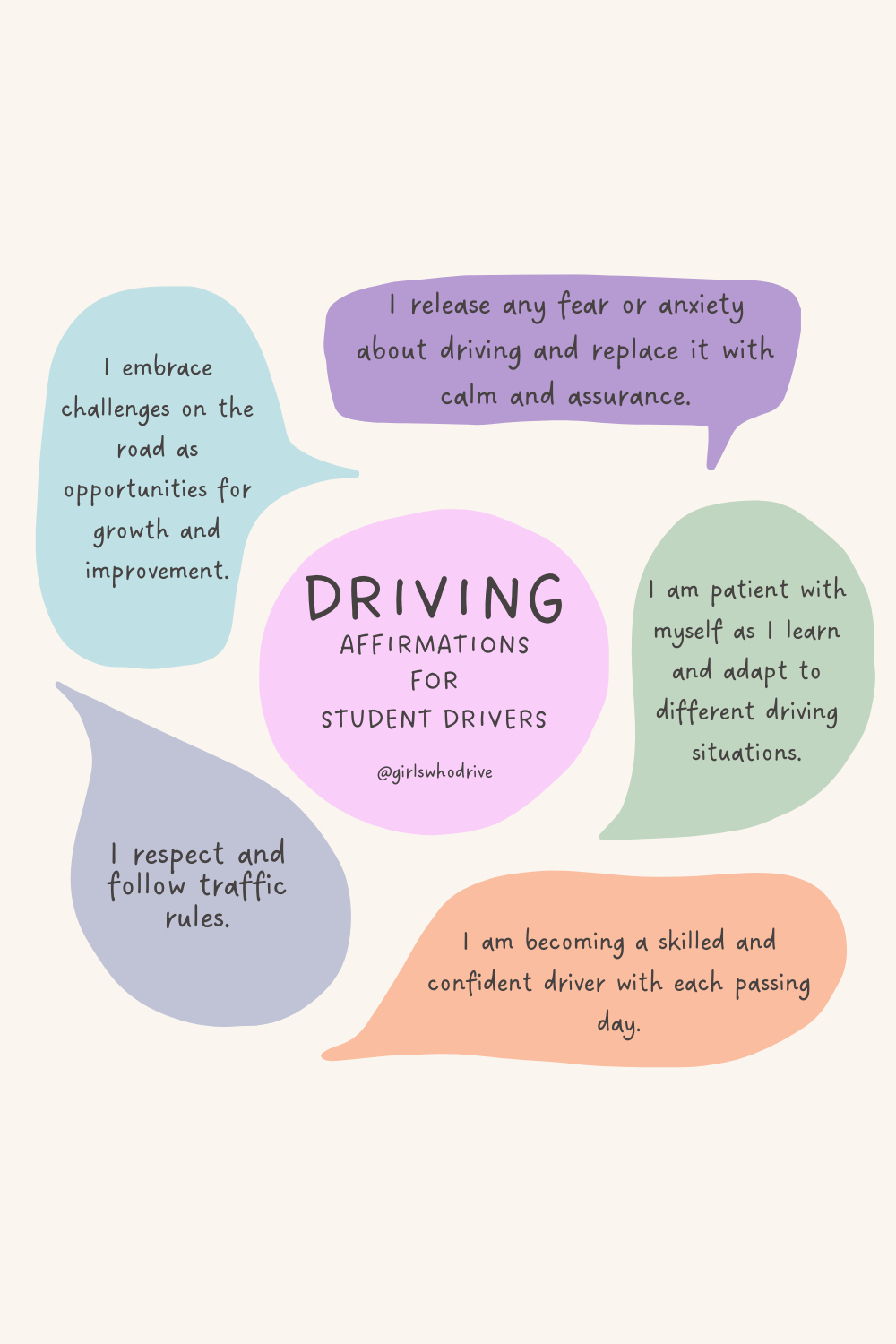
Repetition is key…
When you repeat affirmations like "I am a confident and skilled driver," your brain starts to believe it. And when your brain believes it, your actions follow suit.
Your brain eats up these repeated positive statements like fuel, giving you a boost of confidence and banishing those self-sabotaging thoughts that could derail your driving success.
Affirmations For Student Drivers
10 AffirmationsI don’t have to be perfect. I just have to be safe.
You’re not trying to impress anyone—you’re learning. This takes the pressure off and reminds you that safe matters more than flawless every single time.
It’s okay to take my time. I’m allowed to go at my pace.
When cars are behind you or your instructor is watching, it’s easy to rush. This brings you back to reality: you drive better when you’re calm, not fast.
If I make a mistake, I can recover.
Missed a turn? Stalled the car? It’s not the end. This helps you trust that one small mistake doesn’t ruin everything.
I know more than I think I do.
You’ve studied. You’ve practiced. In stressful moments, your brain tries to convince you otherwise. This reminds you that your knowledge is still there—you just need to trust it.
I can stay calm, even when things feel overwhelming.
Traffic, noise, pressure—it can all hit at once. This grounds you and helps you focus on staying steady instead of spiraling.
Every Lesson is making me better, even the bad ones.
Some lessons feel terrible. That doesn’t mean they were useless. This reframes bad sessions as progress, not failure.
I don’t need to compare myself to other drivers.
That person who parked perfectly? They’ve probably been driving for years. This helps you stay in your lane—literally and mentally.
I am learning how to handle real situations, and that takes time.
Driving isn’t just memorizing rules—it’s reacting in real time. This reminds you that confidence comes from experience, not rushing the process.
I am allowed to ask questions and get things wrong.
You’re not supposed to know everything yet. This gives you permission to learn openly instead of pretending you’ve got it all figured out.
I’ve handled difficult moments before — I can handle this one too.
Think back to a time you were scared and got through it anyway. This builds real confidence, not fake positivity.
Affirmations may not be magic words…
but they sure do work wonders when it comes to boosting confidence, overcoming anxiety, developing safe driving habits, and achieving your driving goals.
But let's not forget the importance of practice.
While affirmations can shift your perspective and build a positive mindset, they alone won't make you a skilled driver.
You've got to put in the practice, get behind the wheel, and experience the real-life situations that driving presents.
Visualize yourself as the skilled and confident driver you're becoming, and watch as your brain rewires itself to make it a reality.