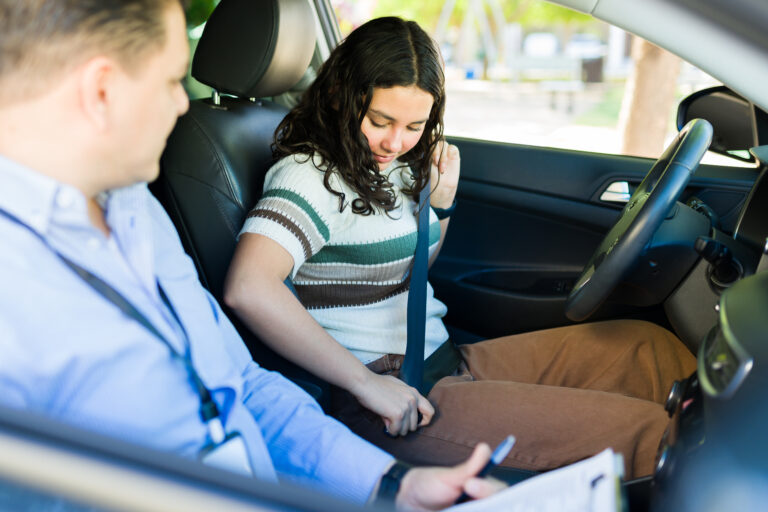
‘Twas the night before your driving test, you did everything right! You’re ready for the moment, and success is in sight.
Here’s the truth: even if you’ve spent months doing practice lessons, what you do the very night before your driving test can make or break you.
Anxiety, poor organization, and a terrible night’s rest are just a few (totally avoidable) things that can affect your score sheet in a bad way.

But don’t worry, we’re here to help.
Below are six very specific things you need to do the night before your big day to increase your chances of passing.
What to do the night before your driving test
1. Review your notes
If you’ve read our post about how to get your driver’s license fast, you should now have a set of really great driving notes.
Tonight is the night to review them thoroughly.
The goal is to review your driving notes consistently throughout your journey, but if you haven’t been, it’s not too late to start.
Reading your notes will remind you of the little things you may have forgotten and the weaknesses you had during your practice sessions.
This helps you stay aware of what to do (and what to avoid), which naturally leads to fewer mistakes.

2. Mental Rehearsal
As you read through your notes, try to visualize yourself performing every action correctly.
Visualization is a simple but powerful technique that helps to reduce anxiety, increase confidence, and practice success.
By visualizing yourself doing things like starting the car correctly, checking your mirrors, and taking the appropriate steps at road signs, you give yourself yet another chance to practice, without actually getting into a vehicle.
This is called mental rehearsal, and it’s been proven to enhance performance.
THE EFFECTS OF MENTAL REHEARSAL ON PERFORMANCE
Recent data suggests that individuals who use structured mental rehearsal techniques experience measurable improvements in performance, with over 200 studies confirming its positive impact on focus, confidence, and anxiety reduction. When combined with physical practice, mental rehearsal has been shown to enhance skill development, improve technique, and increase overall performance outcomes by allowing individuals to mentally simulate and correct actions before executing them in real-life situations.
You can also visualize yourself passing your exam, taking your driver’s license photo, buying your first car, and doing all the other exciting things that come with driving.
Remember: Don’t visualize things going wrong, visualize them going right!
3. Pack your bags
You do not want to be late for your driving exam!
Being late can make you anxious, flustered, and more likely to make mistakes.
Instead, you want to be early enough to get settled, find out anything you need to, and be at ease.
One way to be early is to pack your bags the night before.
In your bag, you should have all the documents you need, including your ID card and driver’s permit.
This may vary by country and state, so be sure to do your own research.
4. Wind down
After preparing everything, take time to wind down and relax.
The goal of this step is to calm you down and reduce any anxiety or fear about the upcoming exam.
How to relax the night before your driving test
If you’re wondering, ‘How can I relax the night before my driving test?‘ you’re not alone.
However, there are many activities people consider ‘relaxing’, but aren’t really.
Let’s face it, not everything we do during our leisure time brings genuine relaxation. Yet, on the eve of your driving test, real relaxation is what you’re after.
This means staying away from intense video games, loud music, dramatic videos, and even avoiding some triggering conversations.
Instead, try:
- listening to calming music
- taking a stroll
- staring out the window
- playing a cute phone game
- deep-breathing
- soaking in a bathtub filled with bubbly soap and surrounded by scented candles
Do whatever you like to do. Just be sure you’re actually relaxing.
5. Set an alarm
Alarms can be annoying, sure, but we have to admit they’re useful.
Alarms help you keep track of time and prevent you from oversleeping.
Be sure to set at least three alarms for the next morning.
If you’re the kind of person who lingers in bed even after the alarm goes off, set some more for at least 5 and 10 minutes after your first alarm so you don’t end up sleeping in.
6. Go to bed early
Finally, sleep.
Often overlooked but undeniably important.
Going to bed early will not only help you be on time for your exam but will also help you remember what you’ve studied and give you a clear head the next day.
If you’re used to going to bed late, this step can be hard, we know.
To help make the process easier, try the following tips:
Make a Simple To-Do List
Do only the essentials before bed: picking an outfit, reviewing your notes, and packing your bag.
Avoid Distractions
Avoid intense video games, social media, or anything that make you lose track of time.
Have an Early, Light Dinner
Pair it with a warm, soothing tea to help your body relax and fall asleep faster.
No Screens 1 HR Before Bed
Blue light can disrupt your sleep by suppressing melatonin — the hormone that helps you fall asleep.
How long should you sleep before the driving test?
We all know that quality sleep is essential for your best performance.
But how much is enough?
Science recommends aiming for a solid 7 to 9 hours of sleep to ensure you’re well-rested and mentally alert on the big day.

Conclusion
The night before your driving test is one of the most important (and most overlooked) parts of passing your driving test.
Handled poorly, it can work against you.
But used wisely, it can set you up for success.
Good luck & Godspeed!
Was this post helpful?
Girls Who Drive — Community Verified