
If you had your way, your first car would come with an in-built barista, voice-activated disco ball, and seats so soft you’d think they were woven from the sighs of a thousand angels.
But unfortunately, budgets, practicality, and common sense exist.
Which brings us to the ultimate first-car dilemma: new or used?
Sure, a brand-new car sounds nice… until you remember things like high interest rates and six-year loans.
On the other hand, a used car might come with a faint whiff of a wet dog — but it also might only cost you three paychecks.
So buckle up. It’s time to figure out which option actually makes sense for your first car.
The Quiz
Answer each question below honestly, then check your result at the end!
Should Your First Car Be New Or Used? 7 Things To Consider:
1. Dollars and Sense (The Price)
Let’s start with one of the biggest factors: price.
If money grew on trees, choosing between a new and used car would be about as serious as choosing between an apple or cherry pie.
Sadly, the reality is a bit less fruity.
Your budget for your first car is probably limited, and you want to make sure you’re investing your hard-earned cash sensibly.

Not surprisingly, brand-new cars usually come with a higher price tag than pre-owned ones… upfront. (We’ll talk about this more in the next point).
This is because you’re paying for a pristine car with zero previous owners, untouched seats, and probably with the latest features.
Used cars, on the other hand, are usually far more budget-friendly because their value has already depreciated.
Of course, they may also come with a few “personality traits” and surprises along the way.
Be honest: how hard would buying a brand-new car hit your wallet?
2. Down the Road Debts (The Cost In The Long Run)
Despite the lower upfront cost of used cars, it’s important to think about the expenses that can show up later.
Used cars are often cheaper to buy — but they may require more frequent (and sometimes expensive) repairs and maintenance over time.

A brand-new car, on the other hand, is less likely to have mechanical issues and usually comes with a manufacturer’s GWD DictionaryCar WarrantyA car warranty is a promise from the car maker or seller to help pay for certain repairs or problems within a set amount of time or mileage.Full Definition .
That warranty acts like a financial safety net, helping cover unexpected repairs and certain maintenance costs.
And then there’s insurance, another major expense to consider.
New cars usually cost more to insure because they’re worth more and are often more expensive to repair or replace.
Warranties 101: New vs Old
Let’s talk a little about warranties.
A new car warranty, also known as a manufacturer’s warranty, typically provides extensive coverage for a set period or mileage.
It often lasts three years or 36,000 miles, whichever comes first.
This gives many new car owners extra peace of mind.
Used cars, however, are often sold “as is,” meaning repairs may become your responsibility.
Some used cars still have part of their original warranty remaining, while others may come with limited third-party warranties.
These warranties can be more restrictive and may require you to pay upfront before being reimbursed.
Which situation would stress you out MORE?
3. Novice or NASCAR? (Your Driving Experience)
Suppose you’re fresh off the driver’s test victory, license in hand, and still picking confetti out of your hair.
Now comes the next big decision.
As a new driver, it’s important to honestly consider your current skill level and confidence behind the wheel.

New drivers are statistically more likely to get into minor accidents, which means scratches, dents, and awkward parking mishaps are pretty common.
That’s why a used car can actually be a smart choice for beginners.
Repairs are often cheaper, and if something does happen, the lower value of the car usually means less financial pain overall.
More experienced drivers, however, will probably feel comfortable in either a new or used car.
With time behind the wheel comes better judgment, smoother reactions, and fewer classic beginner mistakes, which makes both options much more manageable.
How confident are you in your driving skills right now?
4. The Why Behind The Buy (The Car’s Purpose)
When deciding between a car with that fresh new-car smell and one with a bit of history, it’s important to think about your actual motivation.
Ask yourself: is this car mainly a need or a want?
If you’re just looking for a reliable set of wheels to get you from point A to point B (and occasionally point C when life gets crazy), it might be wise to seek a used car.
It’ll usually be more affordable while still getting the job done — without causing emotional damage every time you spot a new scratch.
But if your first car is more about the experience, style, or making a statement, you may find yourself leaning toward a brand-new car.
And honestly, there’s something satisfying about being the very first owner… especially when you get to peel off those protective plastic coverings.
What’s the MAIN thing you want from your first car?
5. Things To Do, Places To Go (Road Quality)
Think about it this way: would you wear brand-new limited edition shoes on a muddy hiking trail?
If your answer is “absolutely not,” then you already understand the next factor: road conditions.
It’s not something most people think about when choosing between a new or used car but it matters more than you’d expect.
Where you live, and the types of roads you drive on regularly, can make a huge difference in your decision to buy a new or used car.
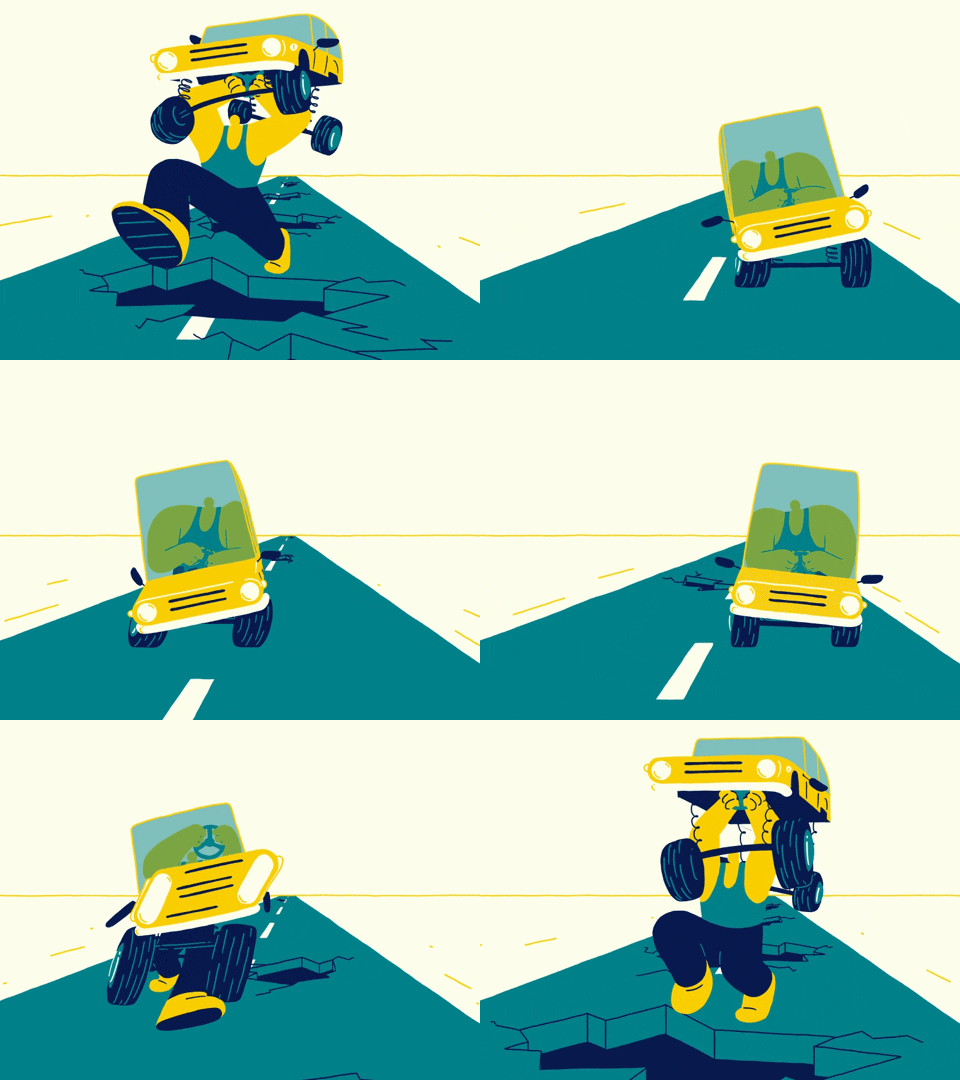
If your daily route feels like an obstacle course of potholes, rough roads, and mystery bumps, a used car may be the smarter choice.
A few extra scratches won’t feel nearly as heartbreaking, and you’ll probably stress less every time the road makes a suspicious crunching sound.
But if your roads are smooth and well-maintained, a new car becomes a much more realistic option.
Your GWD DictionarySuspensionThe suspension is the system of parts that helps absorb bumps in the road and keeps the car stable while driving.Full Definition — and your wallet — will probably thank you.
What are the roads you drive on MOSTLY like?
6. Trusty or Rusty? (Reliability)
Another important factor to consider is reliability.
With a used car, you might find yourself in a guessing game of: “Will it start today?” or “What exactly is that noise?”

Older cars are more likely to develop unexpected issues and may not include the latest safety features.
And realistically, there’s only so much suspicious engine noise that turning up the music can drown out.
A new car, on the other hand, usually offers a smoother and more dependable experience right from the start.
You also get newer safety and reliability features designed to help keep you and your passengers safe.
In other words: less guessing, less stress, and no need to turn the volume into a coping mechanism.
Which situation sounds WORSE to you?
7. What’s On The Inside Counts (The Features)
When buying a car, it’s important to think about the features that actually matter to you.
What’s on your checklist?
Bluetooth? A backup camera? Heated seats for those chilly mornings?
A used car might feel a little behind technologically, especially compared to newer models loaded with giant touch screens and features you didn’t even know existed.
But let’s be honest: not every flashy feature is life-changing.
You may find that a used car still checks most of your boxes without the extra cost.
Because at the end of the day, getting safely to your destination matters a lot more than having twelve different ambient lighting settings.
How important are modern car features to you?
How Used Is ‘Used’?
Let’s clear up a common misconception.
When people hear “used car,” they often imagine a crusty old vehicle with stained seats, a silent radio, and AC that only blows memories of cooler days.
But used cars exist on a spectrum.
On one end, you have cars that are the automotive equivalent of a dinosaur.
On the other hand, you’ll find vehicles that are only a few years old and still in excellent condition.
These are often called “pre-owned” or “certified pre-owned” (CPO).
CPO cars have usually gone through detailed inspections and repairs approved by the dealership, meaning they’re generally in much better shape than the average used car.
Many also come with limited warranties, which adds an extra layer of reassurance.
So if the idea of a new car has you clutching your wallet, a CPO car may just be the goldilocks zone of car purchasing.
Not too old, not too new, but just right.
Progress
Should Your First Car Be New or Used?
Calculating your results…
Recommended Reads
Was this post helpful?
Girls Who Drive — Community Verified