This post may contain affiliate links, which means we’ll receive a commission if you purchase through our link, at no extra cost to you. Please read full disclosure here.
This post is all about the steps to getting your driver’s license.
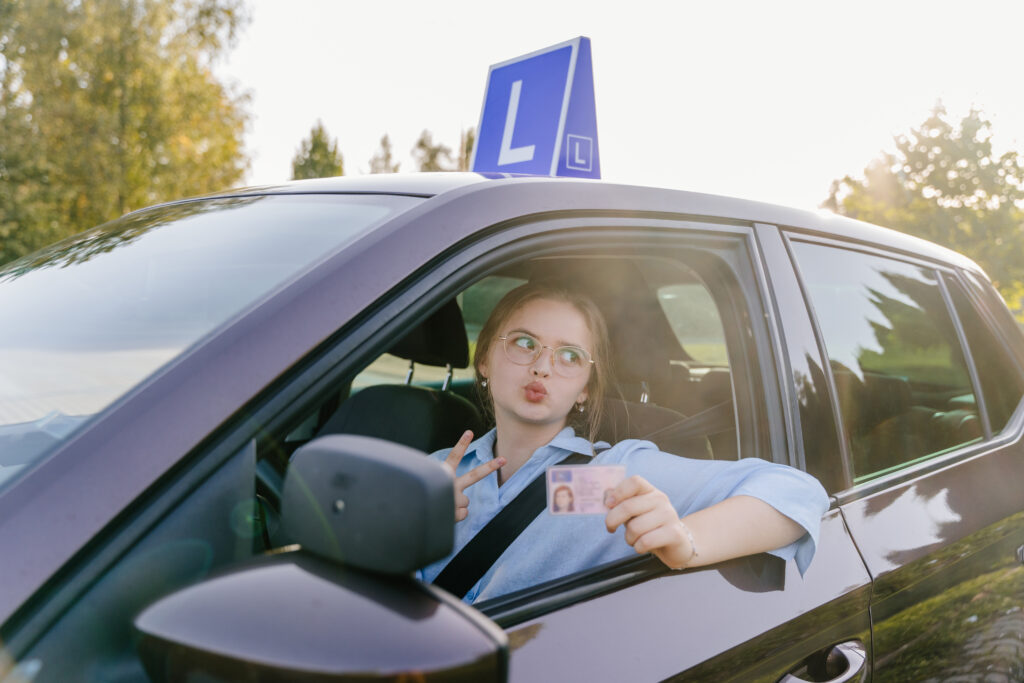
Getting your driver’s license as a complete beginner can feel like… a lot.
Where do you even start?
Interestingly enough, most of the overwhelm doesn’t come from worrying about driving itself, but simply from not knowing what’s involved.
Just as in many other areas of life, the unknown can seem much larger and more daunting than it actually is in reality.
So if you want to stop your brain from filling in the blanks with worst-case scenarios, you need to be clear on what’s involved in finally learning how to drive.
That’s why we’re breaking down every single step to getting your driver’s license — from getting your permit to passing your driving test.
By the end, you’ll have a clear roadmap instead of a giant question mark.
Let’s get into it.
What Are the Steps to Getting Your Driver’s License?
When you zoom out, the journey to getting your driver’s license is actually way simpler than it feels.
It can be broken down into four main steps (or milestones):
- Get your permit
- Practice driving
- Pass the theory test
- Pass the practical driving test
Just seeing it laid out like this already makes it feel more doable, right?
The good news is that these milestones are pretty universal. No matter where you live, the process almost always follows this same general order.
That said, the details of each step — things like age requirements, waiting periods, and test formats — can vary depending on your country or state.
Because of that, it’s always a good idea to double-check the specifics by contacting your local department that issues driver’s licenses and by asking friends or family who’ve recently gone through the process.
Now that you know the big picture, let’s break down each step so you know exactly what’s involved.
Steps To Getting Your Driver’s License
Step 1: Get Your Permit
Your permit — also called a learner’s permit, instruction permit, or provisional permit — is an official document issued by your local government that allows you to legally practice driving under specific conditions.
Think of it as your entry pass into the world of driving.
This is the very first step toward qualifying for a full, unrestricted driver’s license.
How To Get Your Permit
What You’ll Need to Be Eligible
Before anything else, you need to make sure you’re actually allowed to get a permit where you live.
While the exact rules vary by country or state, these are the most common eligibility requirements:
- Minimum age: You must meet the minimum age requirement, which is usually between 14 and 18 depending on your location.
- Medical, vision, or hearing screening: You may be required to complete a basic medical exam or vision and hearing test to show that you meet the minimum standards for driving safely.
- Driver’s education class: In some countries and states, a driver’s education course is mandatory — especially if it’s your first license or if you’re under 18. This may be done online or in person.
- Knowledge or permit test: Some locations require you to pass a written knowledge test before you’re issued a permit. This test often covers road signs, traffic laws, and basic driving rules and is sometimes taken after completing a driver’s education class. In certain cases, it may replace a later theory test (step 3).
If you’re in the U.S. and want to feel actually prepared for your permit test, we recommend this online permit test prep course.
It’s under $30, easy to follow, and includes a money-back guarantee if you don’t pass on your first attempt.
- Parental consent: If you’re under 18, a parent or legal guardian will usually need to sign to approve you learning how to drive.
Documents You’ll Need to Apply
Once you’re eligible, you’ll also need to gather the required documents. These typically include:
- Proof of identity: This may be a birth certificate, national ID card, or passport.
- Application form: You’ll need to complete and submit a permit application form, either online or in person at your local licensing office.
Fees and Final Details
Finally, there are a few practical details to keep in mind:
- Permit or registration fee: Most places charge a fee to issue your permit, along with any additional administrative costs. The exact amount will depend on your location.
Once you have your permit, you’re officially allowed to start practicing behind the wheel — which brings us to step 2.
Step 2: Practice Driving
Once you have your permit, you’re officially allowed to start driving — with supervision.
This is one of the most important parts of your driving journey, because it’s where you learn the real, hands-on skills needed to safely control a vehicle in different situations.
Things like steering, braking, parking, lane changes, and responding to traffic all start to come together during this stage.
How Much Practice Do You Need?
On average, it takes about 40 hours of driving practice to learn the skills required not just to pass your driving test, but to be a safe and confident driver overall.
That said, this number isn’t set in stone.
Some people need more time. Some need less. It all depends on how often you practice and how quickly you pick up the necessary driving skills — and that’s completely normal.
There’s no prize for rushing this step.
Who Can You Practice With?
To complete this step, you’ll usually need to:
- Sign up for driving lessons with an approved or licensed driving instructor
- Practice under supervision, rather than driving alone
In many countries or states, you’re also allowed to complete some of your required driving hours with a qualified adult, such as someone who has held their license for a minimum number of years (often around five).
This can be a great way to get extra practice in a more relaxed, real-life setting.
Read: The 7 Qualities of A Good Driving Instructor
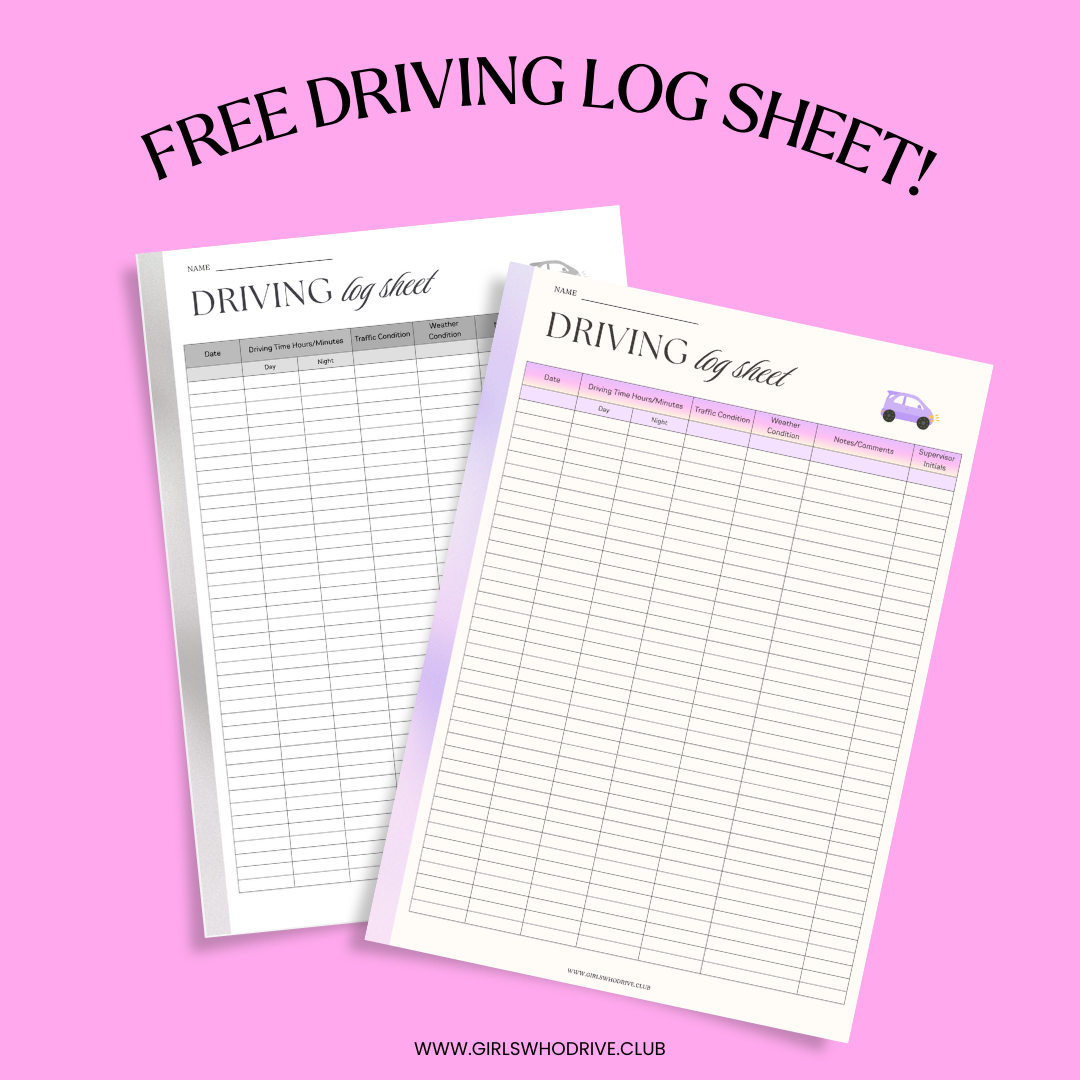
Logging Your Driving Hours
In some locations, you may be required to log or record your driving hours as proof of practice before you’re allowed to take your driving test.
This usually includes details like the date, duration, and type of driving completed.
Make sure you understand your local requirements early on, so you’re not caught off guard later.
P.S. Even if logging your hours isn’t mandatory where you live, doing it anyway can be a game-changer. It helps you stay organized, build confidence, and actually see how far you’ve come.
We’ve made it simple — sign up below to get our free driving log sheet.
Step 3: Pass the theory test
At this stage, you’ll need to pass a theory test (sometimes called a written or knowledge test).
This is usually a multiple-choice exam with anywhere from 20 to 60 questions that test your understanding of things like road signs, traffic laws, rules of the road, and safe driving practices.
Think of it as proving that you know the rules before being trusted with full driving privileges.
What This Test Usually Looks Like
Depending on where you live, the theory test may:
- be taken in person or online
- require a test fee
- be timed
- cover road signs, right-of-way rules, speed limits, and basic driving safety
If you successfully completed a knowledge or permit test in Step 1, you may not need to take a separate theory test at all (see below).
Special Cases to Know About
In some countries — like the U.K. — you may also be required to pass a hazard perception test.
This involves watching short video clips and identifying developing road hazards from a driver’s point of view. The goal is to test how well you can spot and react to potential dangers early.
In the U.S., depending on the state you’re in, this extra theory test is often not required if you already passed the knowledge test when getting your permit.
Local requirements vary, so it’s worth confirming what applies where you live.
If you are differently abled, reasonable accommodations are typically available, including extra time, voiceovers, or assistive technologies.
You can request these when booking your test.
How to Prepare (Without Guessing What to Study)
To pass your theory test, it helps to:
- study the official driving manual for your state or country
- take online practice tests
- learn common road signs and safety regulations
If you want everything in one place, we recommend this site for learning the material and taking unlimited practice tests, so you can walk in knowing you’re ready.
Step 4: Pass the road/ practical test
The final step to getting your driver’s license is passing the road test, also known as the practical driving test.
Read: I Passed My Driving Test The First Time — Here’s How
This is usually the most anticipated (and nerve-wracking) part of the process — and understandably so.
It’s the step that determines whether you officially become a licensed driver!
The good news?
The practical test isn’t very different from your driving lessons. Passing it mostly comes down to doing what you’ve already practiced.
You don’t need to be perfect; you just need to drive safely and follow instructions.
What to Expect on Test Day
During the exam, you’ll drive a vehicle — usually the same one you practiced in — while the examiner sits in the front passenger seat.
In some cases, another person (such as your driving instructor) may sit in the back seat.
From the moment you enter the vehicle, the examiner will give you a series of instructions.
Your job is simply to follow them as best as you can, using everything you’ve learned during your practice sessions.
You may also be asked a few basic questions about vehicle safety or maintenance, such as identifying dashboard warning lights or performing simple safety checks.
What Happens After You Pass
What you receive after passing your practical test depends on where you live. You may be issued:
- a temporary certificate that allows you to drive while waiting for your full license
- a provisional license that can be upgraded after a set period, sometimes with the completion of a defensive driving course
- a provisional license that becomes full once you reach a certain age, complete additional driving hours, or maintain a clean driving record
Again, the exact outcome varies by country and state.
If You Don’t Pass the First Time
If you don’t pass your road test on the first attempt, don’t panic — and don’t take it as a reflection of your ability or worth.
Not passing on the first attempt is extremely common, and it usually means you need a little more practice in one or two areas.
Simply return to Step 2 (Practice Driving), then retake Step 4 when you’re ready.
Many excellent drivers didn’t pass on their first try — and it says nothing about your ability to become a safe, confident driver.
Conclusion
Getting your driver’s license isn’t something you have to figure out all at once.
And it definitely doesn’t have to be overwhelming.
When you break it down into clear steps — getting your permit, practicing driving, passing the theory test, and passing the road test — the process becomes a lot less intimidating and a lot more manageable.
Remember, everyone moves through these steps at their own pace.
There’s no timeline you have to follow and no “right” way to learn, as long as you’re learning safely and confidently.
Take it one step at a time, focus on progress instead of perfection, and trust that each step is preparing you for the next.
Before you know it, that license won’t feel like a distant goal — it’ll be something you’ve actually earned.
You’ve got this!